
How Photobatteries Are Set to Transform the Future of Energy
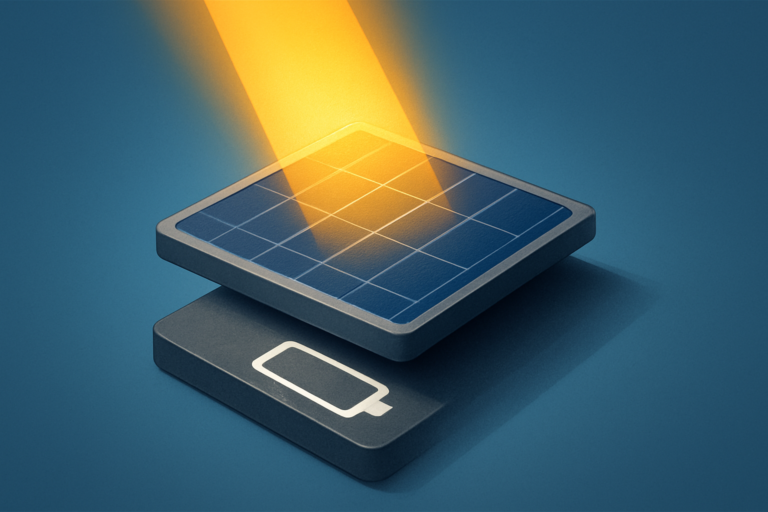
Photobatteries are emerging as one of the most exciting innovations in modern energy technology, promising to merge energy harvesting and storage into a single, highly efficient system. Instead of relying on separate solar panels and battery units, photobatteries integrate both functions within one compact device. This breakthrough allows them to capture light and immediately store the converted energy internally, reducing energy loss, simplifying design, and opening the door to entirely new classes of products.
At their core, photobatteries combine photoactive materials—similar to those found in solar cells—with electrochemical storage layers comparable to lithium-ion or solid-state batteries. When light strikes the device, electrons are generated and transferred directly into the storage medium, removing the need for external wiring or charge controllers. This seamless internal process means better efficiency, fewer components, and a smaller footprint.
The potential impact of photobatteries is enormous. Wearable electronics are one of the most promising areas, as watches, health monitors, and smart clothing could recharge themselves continuously using ambient indoor or outdoor light. IoT sensors used in agriculture, logistics, or smart homes could operate autonomously for years without manual charging. Lightweight robotics, drones, and autonomous systems would benefit from reduced weight and improved power management. Even aerospace and satellite technologies could see measurable gains, as integrated harvesting and storage help extend mission lifetimes and lower payload mass.
While the possibilities are impressive, photobatteries still face challenges. Achieving competitive energy density, maintaining long-term stability under constant illumination, and scaling manufacturing processes are active areas of research. Material innovations—such as perovskites, organic semiconductors, and graphene composites—are showing promising improvements, bringing us closer to commercial-ready devices.
As research accelerates, photobatteries may soon become a key technology driving the future of clean and intelligent energy systems. Their ability to collect and store power in one compact solution makes them ideal for next-generation electronics, smart infrastructure, and sustainable devices. Soon, photobatteries may power everyday products quietly and continuously, transforming the way we design, use, and interact with energy.